Antwan Smith’s Miami Is a Story Engine
From music documentaries and local television to independent features such as Cuzo, Real Goons and Schemers, the Miami director has built a career around artists, pressure and stories made outside the traditional studio lane.
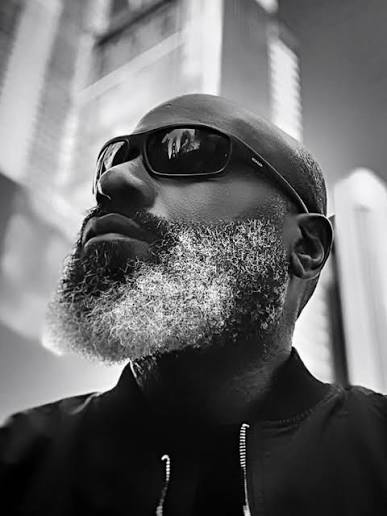
Antwan Smith’s films do not approach Miami as a postcard. They enter through the side doors: recording studios, neighborhood streets, kitchens, hustles and the private negotiations that happen when ambition collides with limited options. Across two decades of directing, Smith has worked in the space where music culture, local television and independent film overlap, building a body of work that feels less imported than assembled from the city’s own creative networks.
His early credits placed him close to the machinery of Southern hip-hop. Smith directed Trick Daddy: Uncut, a 2003 documentary following Trick Daddy during the recording of his album Thug Holiday, and was credited as cinematographer on the project. He also directed Trina: The Making of a Diamond Princess, which documented the making of Trina’s 2002 album. Those projects gave him access to artists at work rather than simply presenting them as finished products. The distinction matters: Smith’s camera has often been interested in process, personality and the world surrounding a performer.
That practical, embedded approach continued in Miami television. WSVN’s Deco Drive identified Smith as the director of Trick Daddy’s cooking and lifestyle series I Got My Pots and noted that he had previously worked as a 7News cameraman. The series, now listed on Tubi, places Trick Daddy in conversation with guests including CeeLo Green, Rick Ross, Trina and Timbaland. It is an unlikely but revealing credit in Smith’s filmography, showing his ability to move between music, reality programming and character-driven entertainment without losing his connection to the people at the center of the frame.
Smith’s narrative work returns to characters caught between loyalty and survival. His feature debut, Bloodline, follows two brothers who land on opposite sides of the law: one becomes a police officer, the other a major drug dealer. The Next Hit turns the music business itself into a thriller, following a rap artist who discovers that his record company has placed a hit on one of its singers. In both films, the professional world is inseparable from the moral stakes. The industry is not a neutral backdrop; it is where power, money and identity are negotiated.
That tension carries into Fade Away, which Smith co-directed with Donell Harris. The film centers on a gifted basketball player whose path changes after an injury, drawing him toward a more dangerous life. Its cast includes Noel Gugliemi, Emilio Rivera, Clifton Powell, Omar Gooding and Tommy Ford. Smith’s credits across these projects suggest a consistent interest in people whose futures narrow suddenly—through violence, betrayal, injury or the pressure to become successful before they are ready.
Cuzo sharpens that interest into a redemption story. Released in 2023, the film follows Emmit Brown as he tries to rebuild his life after loss and incarceration while pursuing a future as a rapper and chef. Smith directed and co-wrote the film, which features Glenn Plummer, Dennis L.A. White, Mike Smiff, Qwote and Anaiyah Sunshine. Its setting and cast connect the film to Miami’s music ecosystem, but its emotional premise is broader: reinvention is difficult when a person’s past remains part of the room.
Smith’s independent infrastructure is equally visible in Real Goons and Schemers. Real Goons, co-directed with Blademil Grullon, follows a college student who enters a rough neighborhood for a project and inadvertently records a murder. Schemers, written by Kevin K. Spence, follows friends facing financial hardship who turn to increasingly dangerous schemes; its ensemble includes Omar Gooding, Fredro Starr, Trina, Safaree Samuels and Kent Jones. The films share a fascination with people trying to convert access, nerve or improvisation into a way forward—and discovering that every shortcut carries a price.
In 2025, Smith was credited as a producer on Miami Kingpins, a series built around figures from the city’s music, nightlife and criminal history, including Rick Ross, Trina, Trick Daddy and Michael Corleone Blanco. The credit brings his recent work back to the same cultural territory where his career began. What distinguishes Smith is not one fixed visual signature or a single genre. It is proximity. He keeps making work with performers, communities and collaborators who already understand the worlds being filmed. Miami is therefore more than his location. It is his talent pool, his subject and, increasingly, the production model behind the stories he continues to put on screen.