Queen Latifah Brings Hip-Hop’s History to ‘The Voice’
As NBC’s singing competition reaches Season 30, the Grammy-winning rapper and actor joins Adam Levine, Kelly Clarkson and Riley Green for a redesigned three-night launch.
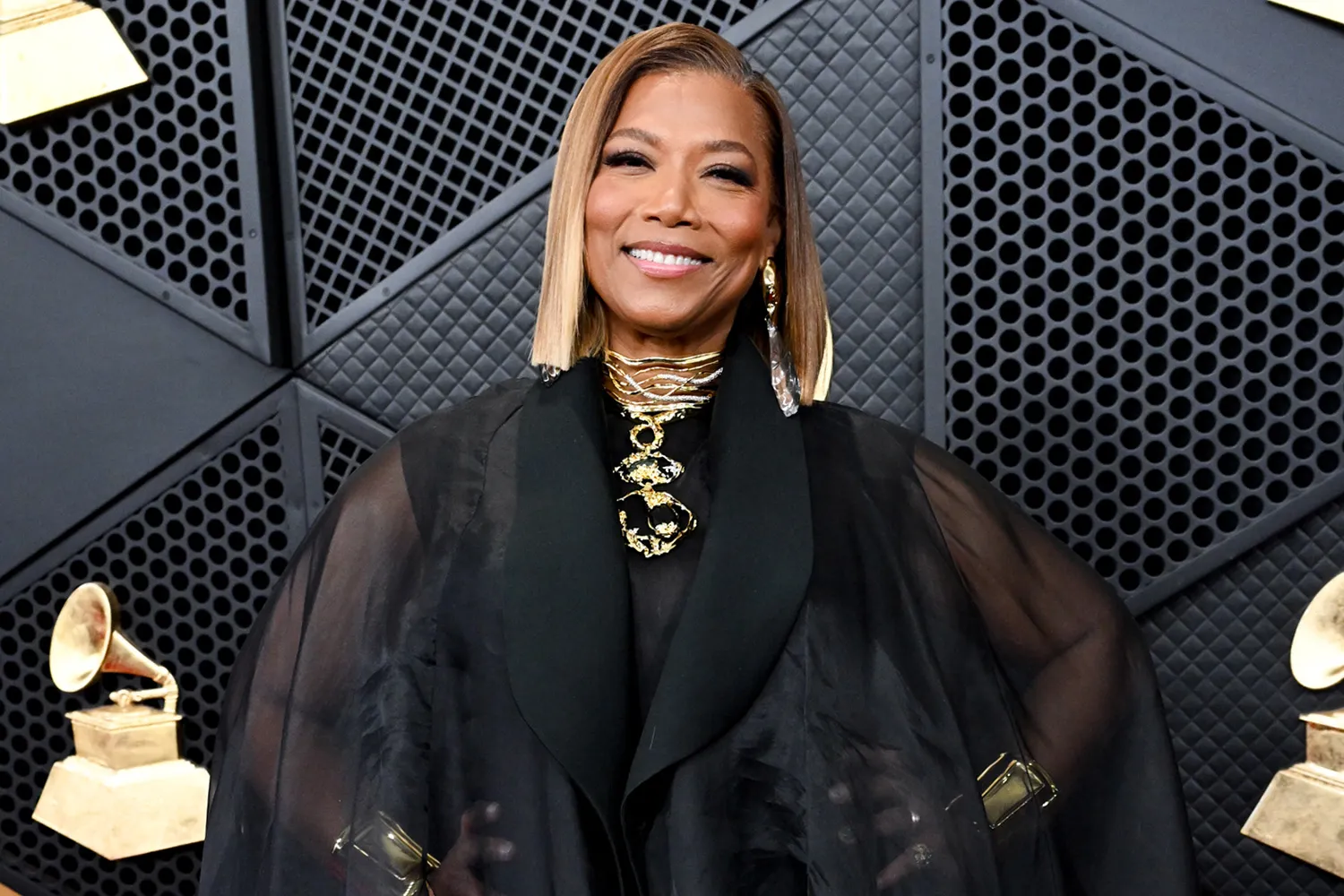
Queen Latifah has spent her career moving between rap, soul, comedy, television and film without treating any of those lanes as a detour. Now she is taking a seat in one of television’s most recognizable chairs. Her coaching debut on The Voice arrives Monday, September 21, as NBC launches the show’s milestone 30th season with a three-night premiere event.
Latifah joins returning coaches Adam Levine and Kelly Clarkson, along with country star Riley Green, who is also making his debut on the panel. The combination gives the anniversary season a broad musical palette, but Latifah’s presence changes the texture of the lineup. She is not simply another famous performer recruited to fill a red chair. She arrives with the perspective of an artist who helped establish the possibilities of women in hip-hop, then built a second career as an actor, producer and television host.
That history matters on a show where the central drama is not just whether someone can sing, but whether a coach can recognize an artist’s identity before the rest of the country does. Latifah’s breakthrough records were rooted in commanding rap, social awareness and a refusal to shrink herself for the market. Her 1993 album Black Reign produced “U.N.I.T.Y.,” which won the 1995 Grammy for Best Rap Solo Performance. Her later work in jazz, R&B and musical theater expanded that vocabulary rather than replacing it.
The Voice is also arriving in a noticeably different form. Season 30 brings back six weeks of live shows and adds new rules designed to make the competition more immediate. During the Blind Auditions, a new “First In” button gives the first coach to turn on a multi-chair performance a chance to claim that artist before the final decision. Later, Cut Week will send selected contestants directly into the live rounds while others compete for the remaining places. Viewers will be able to vote by text message and TikTok, with results announced the same night.
The season’s rollout is equally ambitious. The Voice begins at 8 p.m. ET/PT on Monday, September 21, continues Tuesday and Wednesday, and will stream the following day on Peacock. For the first time, the live shows will be simulcast on NBC and Peacock across time zones. NBC is also tying the competition to TikTok creators, behind-the-scenes programming and a partnership that will give the eventual winner a performance slot at Governors Ball 2027.
Before Latifah coaches her first singer, the show has already placed her inside its larger history. The Voice’s 30th-season celebration brings together former coaches including Blake Shelton, CeeLo Green and Gwen Stefani with members of the current panel. Latifah’s participation makes the special feel less like a retrospective than a handoff between different eras of televised music discovery.
Her arrival also extends a long connection between Black music and the show’s coaching bench, which has previously included Alicia Keys, John Legend, Jennifer Hudson, Pharrell Williams and Snoop Dogg. But Latifah brings an unusual combination of rap authority, crossover instincts and screen experience. She knows what it means to introduce a new voice to a mass audience—and how quickly one performance can define the way that audience sees an artist.
The first blind auditions will show whether her team leans toward polished vocalists, genre-bending performers, soul singers or artists who refuse neat categorization. That may be the season’s most compelling question. On a program built around finding the next great voice, Queen Latifah’s own challenge is to prove what kind of musical future she can hear before everyone else does.